
PLA vs PETG vs ABS vs ASA: Choosing a Filament for Your Printer
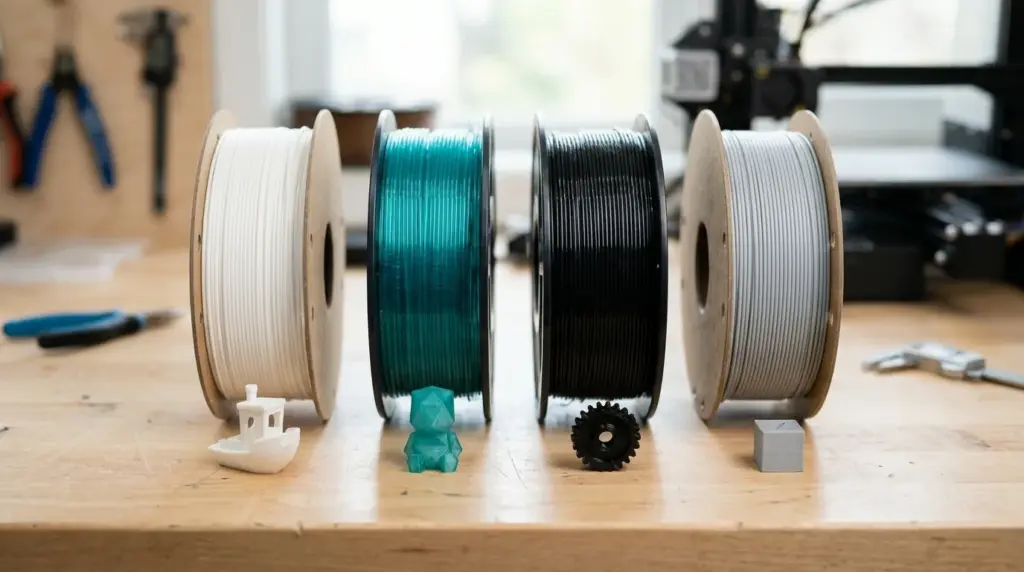
PLA, PETG, ABS and ASA cover most of what people print at home. They are often presented as a ladder from “easy” to “advanced”, but the better question is which one fits the part you need and the printer you own. This comparison looks at the properties that matter in practice and the printer features each material depends on.
The quick comparison
| PLA | PETG | ABS | ASA | |
|---|---|---|---|---|
| Ease of printing | Easiest | Easy | Moderate | Moderate |
| Typical nozzle temperature | 190–220 °C | 220–250 °C | 240–260 °C | 240–260 °C |
| Typical bed temperature | 50–65 °C | 70–85 °C | 90–110 °C | 90–110 °C |
| Enclosure | Not needed | Not needed | Strongly recommended | Strongly recommended |
| Heat resistance | Low (softens near 60 °C) | Medium (about 75–80 °C) | High (about 100 °C) | High (about 100 °C) |
| Outdoor / UV use | Poor | Fair | Poor (yellows) | Good |
| Toughness | Stiff but brittle | Tough, slightly flexible | Tough | Tough |
| Fumes / odor | Low | Low | Noticeable | Noticeable |
Temperatures are typical ranges; your filament’s label takes priority.
PLA: the default for a reason
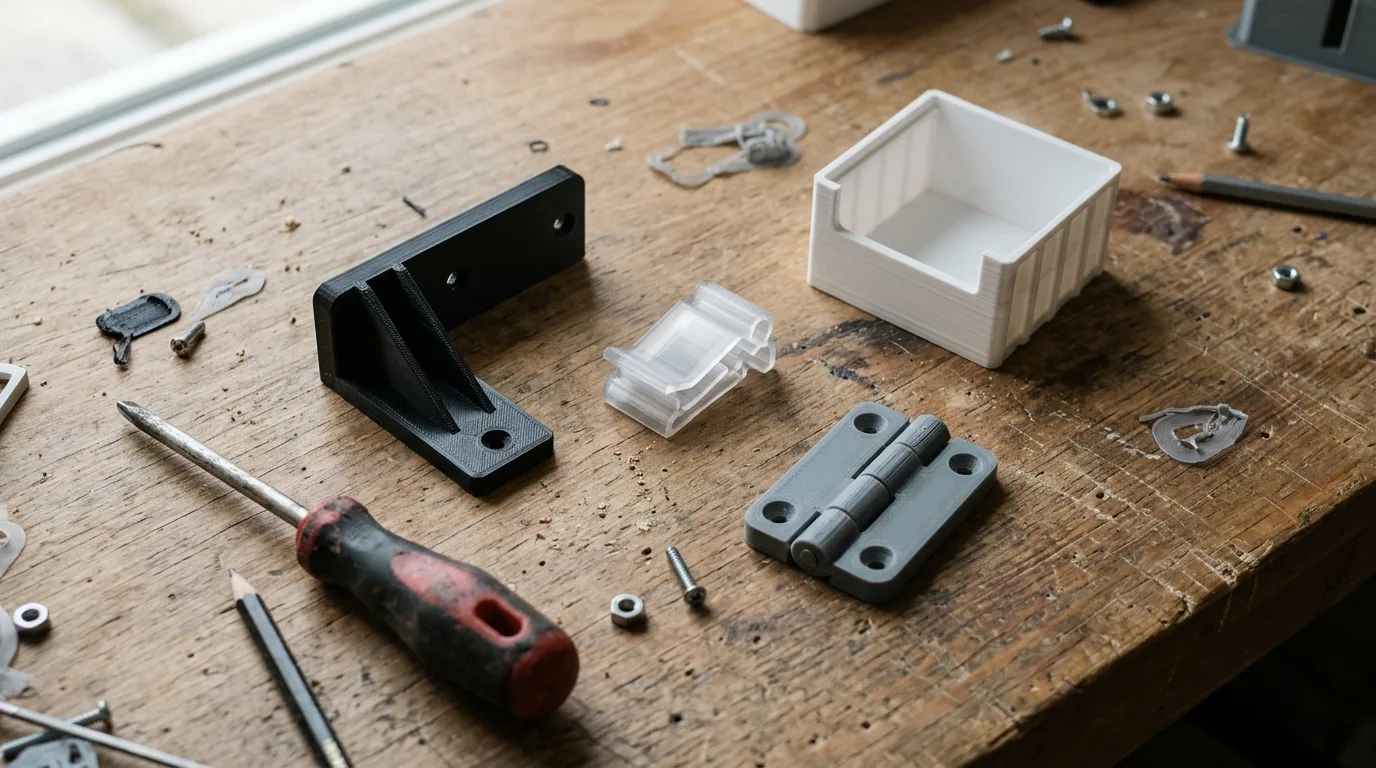
PLA prints cleanly on almost any FDM printer, holds fine detail and barely warps. It is ideal for prototypes, models, figurines, organizers and anything that stays indoors at room temperature.
Its weakness is heat. A PLA part left in a car on a sunny day, near a radiator or under a hot lamp can sag. It is also more brittle than PETG, so snap-fit parts may crack.
Printer requirements are minimal, which is why PLA is rated suitable on nearly every printer in the database, open frame or enclosed. Note that an enclosed printer can run too warm for PLA; many manufacturers advise opening the door or lid when printing it.
PETG: the practical upgrade
PETG adds toughness, better chemical resistance and more heat tolerance while staying easy to print without an enclosure. It is a good choice for functional parts such as brackets, enclosures, plant pots and water-contact parts (as long as the specific filament is rated for it).
Trade-offs: PETG strings more than PLA, sticks very strongly to some build surfaces (a release agent or the right plate helps), and absorbs moisture, so drying improves results. See how to dry filament.
Examples: Bambu Lab A1 with PETG and Creality Ender-3 V3 KE with PETG show open-frame printers handling it well.
ABS: heat resistance with conditions
ABS survives temperatures that would deform PLA and PETG, can be sanded and vapor-smoothed with acetone, and is tough. It is a classic choice for car interior parts, tool housings and parts near motors.
The cost is printing difficulty. ABS shrinks as it cools, so it warps and splits without stable warm air around the part, and it releases fumes. In practice it needs an enclosed printer for anything larger than small parts. Compare an open-frame printer with ABS and an enclosed one, and read do you need an enclosure for ABS and ASA for the details.
ASA: ABS for the outdoors
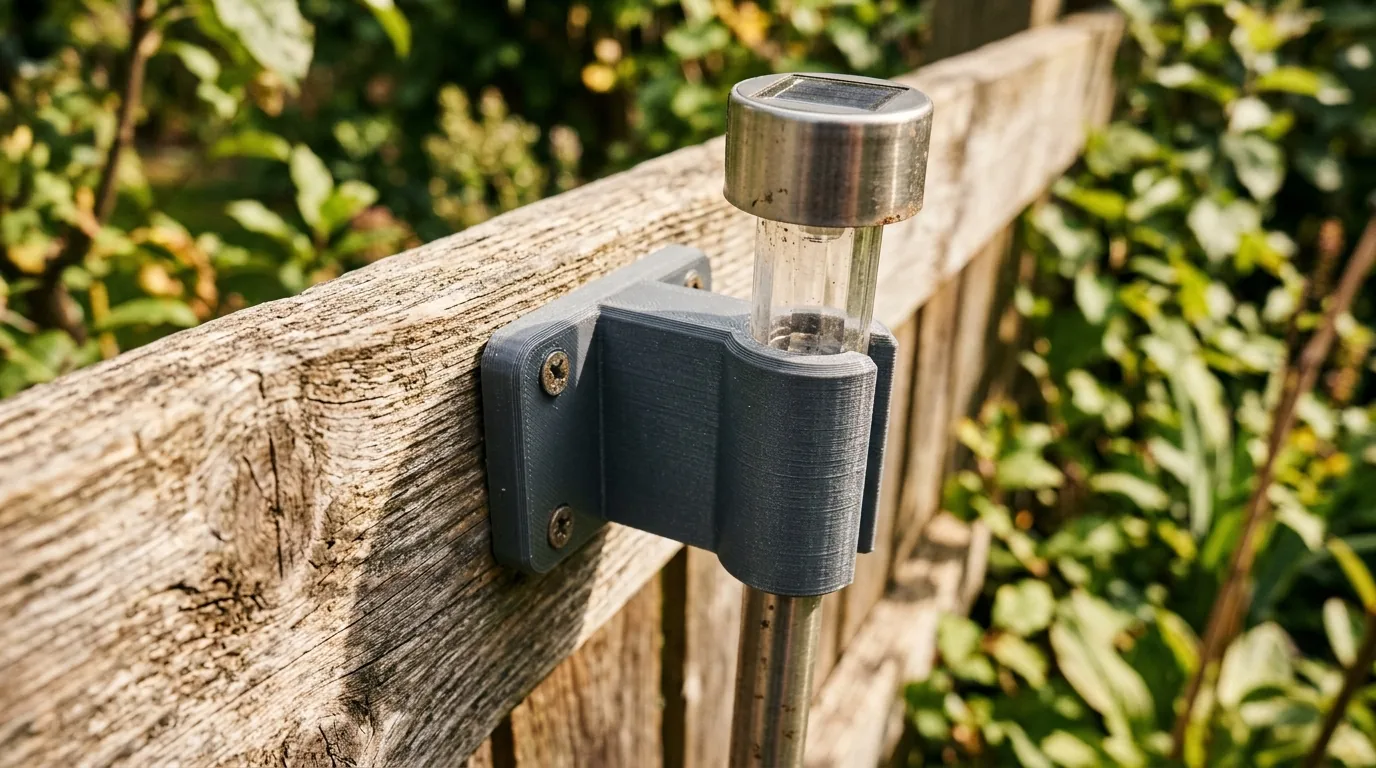
ASA prints like ABS and has similar heat resistance, but it resists UV light and weather much better. If a part will live outside, such as a garden fixture, a mount on a fence or a sensor housing, ASA is usually the better choice. Printer requirements are effectively the same as ABS. See the ASA material page.
How to choose in three questions
- Will the part get hot? Above roughly 55 °C (sun in a car, near a motor), skip PLA. PETG covers moderate heat; ABS or ASA cover more.
- Will it be outdoors? Choose ASA, or PETG for less demanding parts.
- What does your printer allow? On an open-frame printer, PLA and PETG are the comfortable choices. ABS and ASA call for an enclosed machine.
If none of these four fits, look at the engineering options: TPU for flexible parts, nylon for wear and toughness, polycarbonate for very high heat and impact, or carbon-fiber blends for stiffness (with a hardened nozzle).
Check your exact printer
Specifications vary even within one brand, so the safest step is to check the combination you plan to use. The compatibility checker shows nozzle and bed suitability, enclosure needs and the main limitation for each printer and material, with the official source. You can also browse by model in the printer database.