
How to Dry 3D Printer Filament: Methods, Temperatures and Times
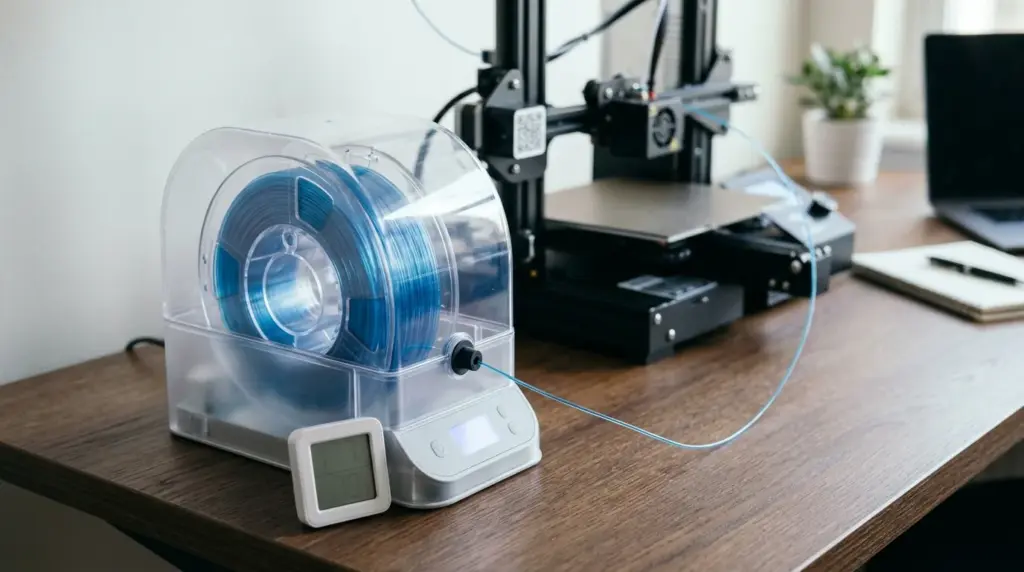
Wet filament is one of the most common causes of bad prints that people never suspect. The printer is fine, the slicer profile is fine, yet the print comes out stringy, rough and weak. Most 3D printing plastics absorb water from the air, some within hours. This guide shows how to recognize wet filament, how to dry it with the equipment you probably already have, and the typical drying temperatures for each common material.
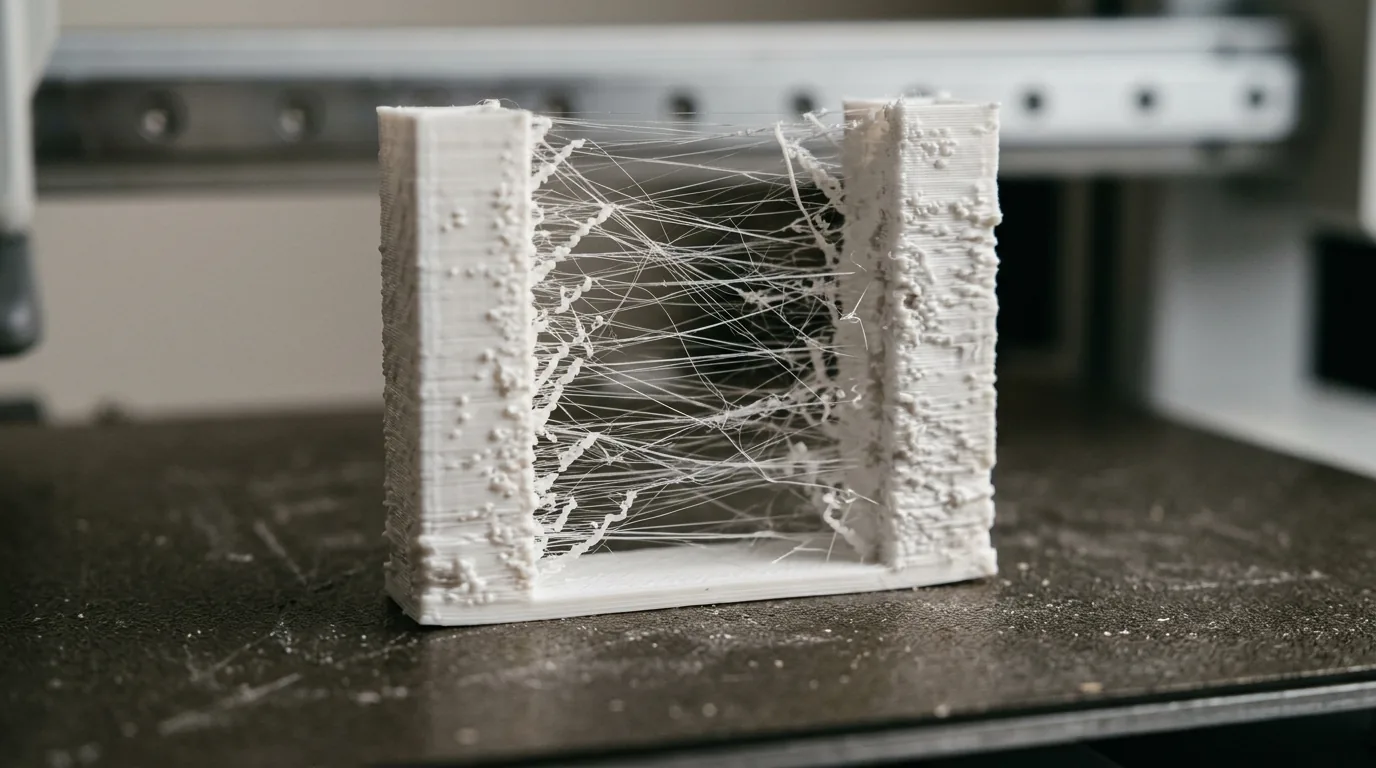
Signs your filament is wet
- Popping or crackling at the nozzle as trapped water turns to steam.
- Stringing and oozing that retraction tuning does not fix.
- Rough, fuzzy or bubbly surfaces, sometimes with tiny holes.
- Weak layer adhesion and parts that snap more easily than they should.
- Brittle filament that breaks in the feeding path (common with old PLA, although brittleness can also come from age and storage conditions).
Nylon is the extreme case: a spool left in a humid room can show these symptoms within a day.
Which materials absorb the most moisture
Roughly from most to least sensitive:
- PVA (water-soluble support): extremely sensitive; keep it sealed at all times.
- Nylon (PA) and nylon composites such as PA-CF and PA-GF.
- TPU and other flexible filaments.
- Polycarbonate (PC) and PC blends.
- PETG.
- ABS and ASA.
- PLA, which absorbs less but still benefits from dry storage.
The “filament drying” field on each compatibility result tells you whether drying is recommended or required for that material, for example Bambu Lab P1S with PA / Nylon or Creality K1C with TPU.
Typical drying temperatures and times
These are common starting ranges from filament manufacturers’ guidance. Always prefer the values printed on your spool or in its datasheet, because formulations differ between brands.
| Material | Typical drying temperature | Typical time |
|---|---|---|
| PLA, Silk PLA | 45–55 °C | 4–8 h |
| PETG | 55–65 °C | 4–8 h |
| ABS, ASA | 60–80 °C | 4–8 h |
| TPU | 50–70 °C | 4–8 h |
| PA / Nylon, PA-CF | 70–90 °C | 8–12 h |
| PC, PC-CF | 70–90 °C | 6–8 h |
| PVA | 45–55 °C | 6–10 h |
The upper limit matters more than the time. Drying too hot softens the filament, fuses the outer windings together or deforms a plastic spool. PLA is the easiest to ruin this way because it softens at around 60 °C.
Method 1: a dedicated filament dryer
A filament dryer is a small heated box that holds one or two spools. It is the simplest and safest option, and many models let you print directly from the dryer, which is ideal for nylon and TPU.
- Check that the dryer can reach the temperature your material needs. Many low-cost dryers top out around 55–70 °C, enough for PLA, PETG and TPU but slow for nylon and PC.
- Load the spool, set the temperature from the table above or the spool label, and run the full time.
- Print from the dryer, or move the spool straight into sealed storage.
Method 2: a food dehydrator
A food dehydrator with adjustable temperature works well if a spool fits inside. Cut the middle out of the trays if needed. Many dehydrators are limited to about 70 °C, which suits most materials except a thorough nylon or PC dry.
Method 3: the printer’s heated bed
Some printers and slicers include a drying function that uses the heated bed under a cover. Placing the spool on the bed and covering it with a box also works for PLA and PETG. Results are uneven because only one side is heated, so turn the spool halfway through. Only do this if your printer’s manufacturer describes or allows it.
Method 4: a kitchen oven (with caution)
Ovens are not designed for low, stable temperatures. Many overshoot by 10–20 °C at low settings, which is enough to fuse PLA. If you use one, measure the real temperature with a separate thermometer first, never leave it unattended, and do not use an oven you cook food in for plastics that release fumes when overheated.
Keeping filament dry after drying
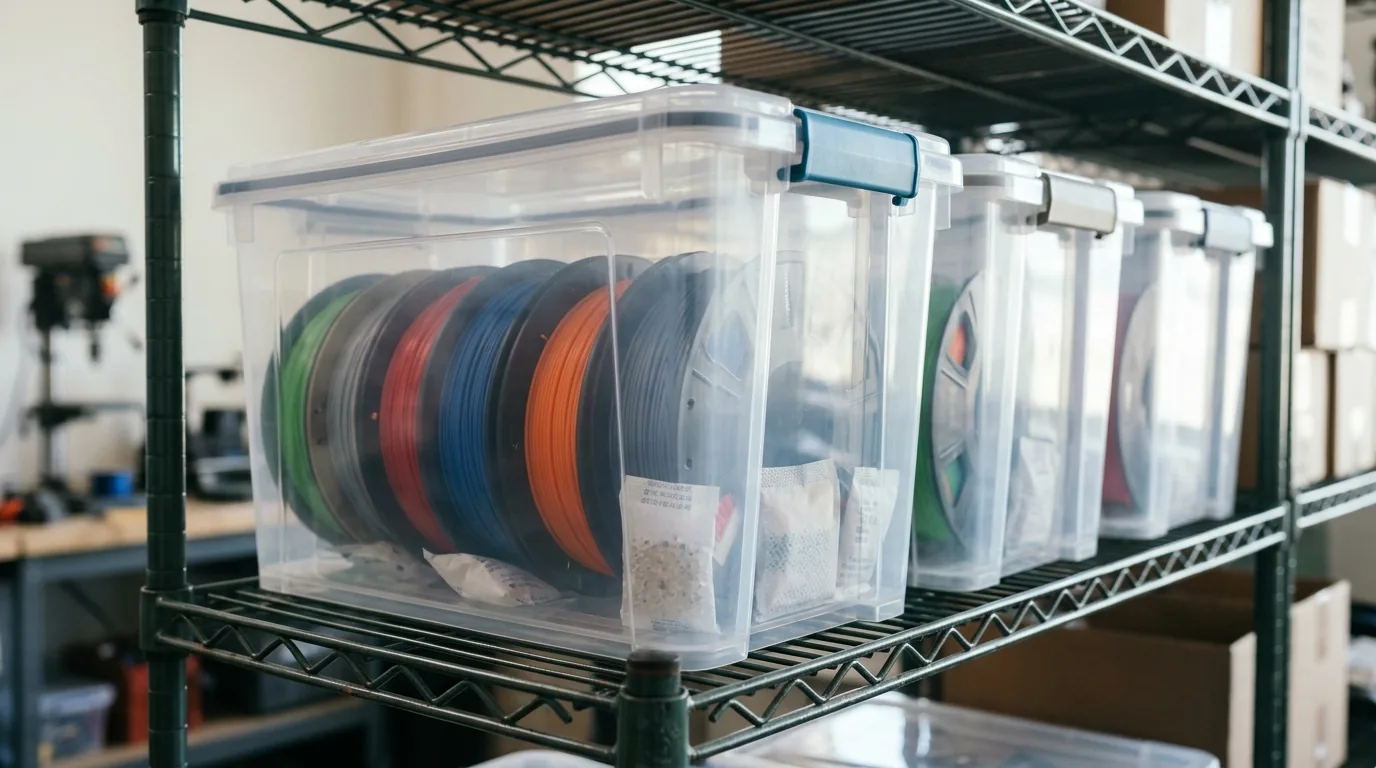
- Store spools in airtight bags or boxes with fresh desiccant (silica gel).
- Add a cheap humidity card or hygrometer; aim to keep the inside well below 20 % relative humidity for nylon and PVA, and below about 30–40 % for most other materials.
- Recharge desiccant regularly according to its instructions.
- For long prints with sensitive materials, feed from a dry box or dryer rather than an open spool holder.
When drying is not the problem
If dried filament still prints badly, check the rest of the combination: nozzle temperature limits, a worn nozzle after abrasive materials, enclosure needs for ABS and ASA, and bed temperature. The compatibility checker shows these factors for each printer and material together. Related guides: do you need an enclosure for ABS and ASA and when a hardened nozzle is required.
For manufacturer drying values, see official material tables such as the Bambu Lab filament guide or the Prusa material guide.