
Hardened Steel Nozzle for Carbon Fiber Filament: When It Is Required
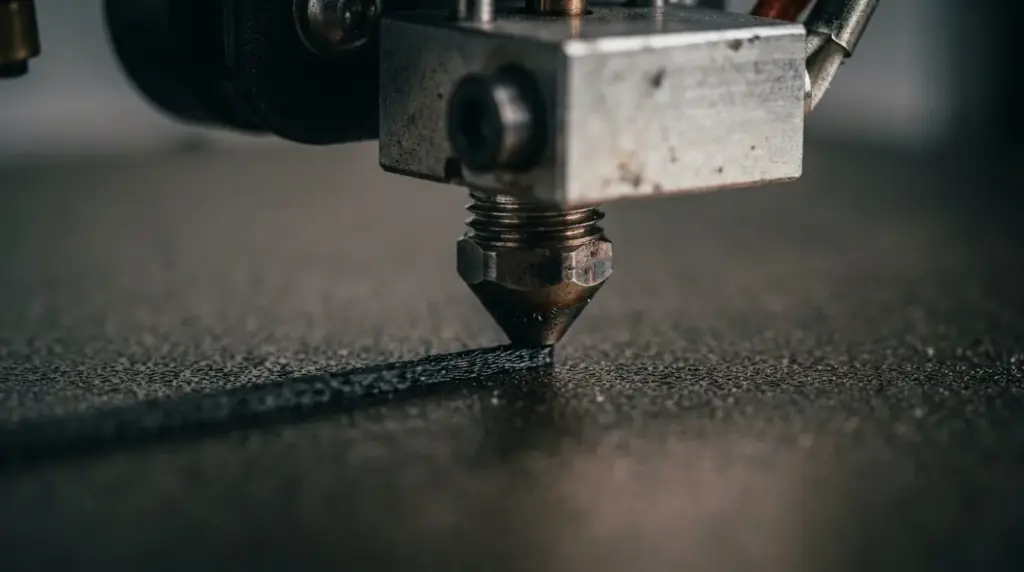
Carbon fiber filaments such as PLA-CF, PETG-CF and PA-CF look like a simple upgrade: stiffer parts, a matte finish, less warping. They also carry a cost that does not appear on the spool label. The short fibers in these materials are abrasive, and they can wear a standard brass nozzle in a surprisingly short time. This guide explains what happens inside the nozzle, which materials need a hardened nozzle, and how to tell whether your printer already has one.
Why carbon fiber filament wears nozzles
“Carbon fiber” filament is a normal base plastic filled with chopped carbon fibers, usually a fraction of a millimeter long. Glass-filled filaments (ABS-GF, PA-GF) work the same way with glass fibers. As the melted plastic is forced through the narrow nozzle bore, the fibers scrape the inner wall like fine sandpaper.
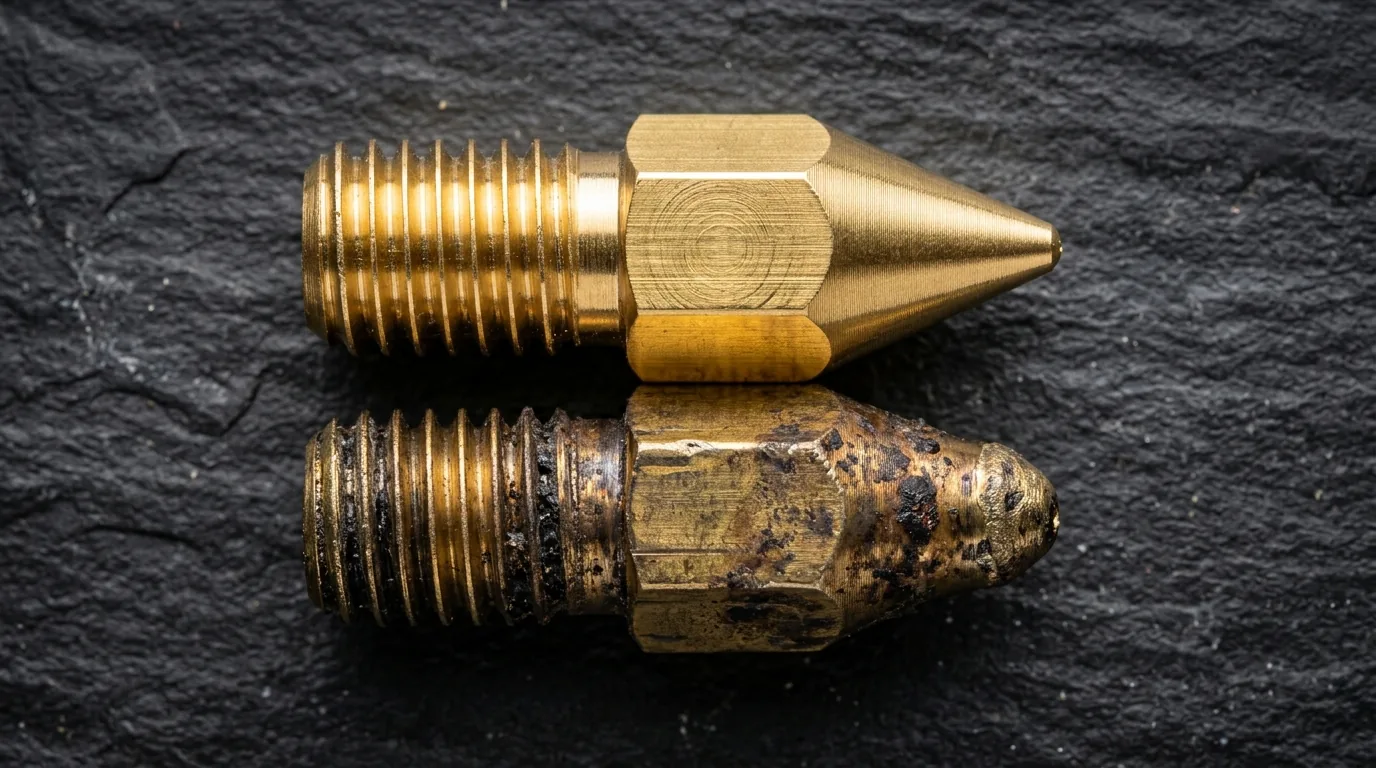
Brass is soft. As the bore widens and the tip rounds off, you see:
- extrusion that slowly becomes inconsistent or over-extruded;
- wider, less precise lines and poorer small details;
- stringing and blobs that did not exist before;
- in bad cases, a nozzle tip that is visibly shortened or deformed.
Because the change is gradual, many people blame slicer settings long before they inspect the nozzle.
Which materials need a hardened nozzle
| Material | Abrasive? | Hardened nozzle |
|---|---|---|
| PLA, PETG, ABS, ASA, TPU | No | Not required |
| Silk PLA | No | Not required |
| PLA-CF, PETG-CF | Yes | Required or strongly recommended |
| PA-CF, PC-CF, PET-CF | Yes | Required |
| ASA-CF, ABS-GF, PA-GF | Yes | Required |
Glow-in-the-dark, metal-filled and some wood-filled filaments can also be abrasive. When in doubt, check the filament maker’s datasheet: abrasive products usually state that a hardened nozzle is needed.
Nozzle materials, briefly
- Brass: excellent heat transfer, cheap, wears quickly with abrasives. Standard on many printers.
- Stainless steel: more wear resistant than brass and food-contact friendly, but still not designed for continuous abrasive printing.
- Hardened steel: the usual choice for carbon and glass fiber. Conducts heat less well, so some users raise temperature slightly or lower maximum flow.
- Coated or tipped nozzles (tungsten carbide, ruby or similar inserts): very wear resistant, more expensive.
Does your printer already have one?
This is the most common source of confusion, because printers in the same brand family often ship with different nozzles. Look in the specifications for the nozzle material, not just the diameter. A few examples from the database:
- The Bambu Lab X1 Carbon with PLA-CF result reflects a printer sold with a hardened steel nozzle.
- The Bambu Lab P1S with PLA-CF and Bambu Lab A1 with PLA-CF results show what changes when the stock nozzle is not hardened.
- The ELEGOO Centauri Carbon line was designed with carbon fiber in mind; compare Centauri Carbon with PLA-CF with Centauri 2 with PLA-CF.
- For engineering fibers, compare Creality K2 Plus with PA-CF and Prusa CORE One+ with PA-CF.
Each result shows the stock-nozzle suitability and whether a hardened nozzle is required, with the official source and the date it was checked. Manufacturers sometimes change the shipped nozzle between revisions, so confirm on the source page for your exact unit.
The nozzle is not the only requirement
A hardened nozzle solves wear, not everything else. Check the base material too:
- PLA-CF and PETG-CF behave much like their base plastics and print well on most printers once the nozzle is right.
- PA-CF (nylon) needs very dry filament, high nozzle temperatures (often 270–300 °C) and benefits from an enclosure. See our guide on printing nylon and PA-CF.
- PC-CF adds high bed and chamber temperature needs on top of abrasion.
Some printers also have extruder gears or filament paths that wear with abrasive materials. Hardened gears exist for this reason; check the manufacturer’s notes for your model.
Practical tips when switching to carbon fiber
- Install the hardened nozzle before the first abrasive print, not after you notice wear.
- Use a 0.4 mm or larger nozzle. A 0.2 mm nozzle clogs easily with fibers.
- Dry the filament; many CF blends absorb moisture, nylon-based ones especially. See how to dry filament.
- If your printer uses a multi-material unit, check whether the manufacturer approves abrasive filament in it.
- Keep a spare nozzle and note print hours on abrasives, so you can tell when wear starts to matter.
Common questions
Can I print one spool of PLA-CF with a brass nozzle?
You can, but the nozzle will likely be worn by the end of it, and print quality will drift during the spool. If your printer’s manufacturer says a hardened nozzle is required for that material, follow it.
Is a hardened nozzle fine for normal PLA?
Yes. Hardened steel prints PLA, PETG and ABS well. Because it transfers heat less efficiently, some users add 5–10 °C or slightly reduce maximum volumetric speed.
Is stainless steel enough?
It lasts longer than brass, but most manufacturers recommend hardened steel for fiber-filled materials. Follow the guidance for your printer.
Check any printer and fiber material in the compatibility checker. Manufacturer guidance on abrasive materials is collected in references such as the Bambu Lab filament guide.